

Look, I get it. You need to review prepositions of time. Again. Your students keep saying “on the morning” and “at Monday,” and you’re wondering if drilling in/on/at for the 47th time will finally make it stick this time.
Yeah, I didn’t think so either…definitely not if you do it the same way that already hasn’t worked.
Here’s the thing. Adult ESL students will absolutely sit through another worksheet or set of task cards if that’s what you give them. They’re adults. They’re polite. They know how school operates. But that doesn’t mean they’re actually engaged, and it sure doesn’t mean they’ll remember it better this time around.
So if that didn’t work (or you want something else) let’s try something different. These two activities get students moving, making choices and competing a little. And yes, they’re simple enough that you can prep them in under 10 minutes.
Activity 1: Tape It to the Wall
This one gets students out of their seats, which in adult ESL classes is rarer than you’d think. Most of our students sit in office chairs all day or stand on their feet for hours. Either way, a little movement helps their brains wake up.
What you need:
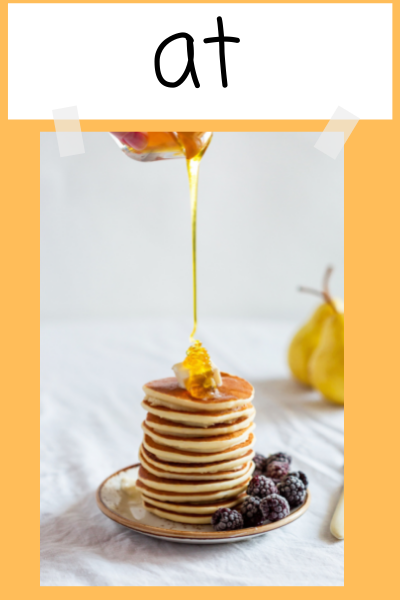
- Printed images of common activities and routines (breakfast, a clock showing 3:00, someone sleeping, a calendar page, someone at work, etc.)
- Four pieces of paper with the prepositions: in, on, at, from…to
- Tape. Lots of tape. Pre-torn pieces stuck to the edge of your desk so you’re not passing around the only tape dispenser you have amongst 10+ students who all need it at the same time.
Here’s how it goes:
Tape those four preposition posters on the walls in different areas of your classroom. Put all the images in one pile on a desk or table.
Students come up one at a time, grab an image, and tape it under the preposition they’d use to talk about that activity. While they’re taping it up, they say a sentence out loud.
So if Jin grabs a picture of breakfast, she might tape it under at and say, “I eat breakfast at 6:30.” Or she might tape it under in and say, “I eat breakfast in the morning.” Both sentences are correct. The preposition she chooses depends on the sentence she makes.
That’s the beautiful part. There’s no single “right answer” for most images. A picture of someone at a desk could go under at (“I start work at 9:00”), in (“I’m busy in the afternoon”), or from…to (“I’m at my desk from 8:00 to 5:00”). Students have to think about the preposition AND create a sentence that makes sense.

Why this matters:
You’re not drilling isolated grammar. You’re making them use prepositions in context, which is how language actually gets remembered. Plus, when Carla hears five different students make five different sentences about the same image, she’s getting repetition without the soul-crushing boredom of repeat-after-me drills.
Optional add-on:
If you want to squeeze more production out of this, have everyone write down the sentences as students say them. Or, once all the images are up on the walls, have students write 2-3 sentences for each preposition using what’s taped up. Now you’ve got speaking, listening, AND writing practice from one activity.
Activity 2: Race to Get It Right (Not Just Race to Finish)
A little competition changes the energy in a room. Not cutthroat, winner-take-all competition (sometimes I have to remind certain students of that). Just enough to make students care about speed AND accuracy.
You’ll need a list of time expressions: Monday morning, winter, August, noon, December 16th, the 21st century, night, 6:00–10:00, Halloween. You get the idea.
Now, I’m giving you two versions of this because I know some of you have access to a printer and 10 minutes to cut cards, and some of you are teaching in a closet with no materials budget and a printer that’s been “broken” since 2019.
Version 1: Cards (if you’ve got the time)
Write each time expression on a small card. Write the four prepositions (in, on, at, from…to) on larger cards or use colored paper so they stand out.
Give each pair or small group a set of time expression cards and a set of preposition cards. Their job? Group the time expressions with the correct prepositions as fast as they can.
Here’s the key: announce a start time, and call time as soon as the FIRST group shouts that they’re done.
Then check everyone’s answers. The winner isn’t necessarily the group that finished first. It’s the group with the MOST correct answers.
I love this because it stops students from just racing through without thinking. Ama’s group might finish 30 seconds before everyone else, but if they’ve got half their answers wrong, they don’t win. The group went a little slower but was more accurate? They might be your actual winners.
Version 2: Handout (if you’re low on time or supplies)
Create a simple table with four columns. Put one preposition at the top of each column. Below the table (or on a second page), list a bunch of time expressions in random order.
Give each student a handout. They can work in pairs or small groups, but everyone writes on their own paper. This keeps one student from doing all the writing while their classmates do all the talking, and it gives each student something to take with them afterward.
Same rules: call time when the first person says they’re finished, then check everyone’s work. Winner = most correct answers.
Optional challenge:
Leave a few blank rows in each column and have students come up with their own time expressions. You’ll see what they actually talk about in their lives (volleyball practice, Ramadan, their shift at Amazon), and you’ll know whether they can generate examples or just recognize correct answers.
Why These Beat Another Worksheet
Worksheets aren’t evil. Sometimes they’re exactly what you need. But when you’re reviewing something students have seen a million times, they need a reason to engage with it differently.
These activities make students:
- Make decisions (which preposition fits THIS sentence?)
- Move or compete (which keeps their brains alert)
- Hear multiple examples from classmates (more input, more context)
- Care about accuracy, not just finishing fast
And honestly? They’re faster to prep than you think. Print some images, write some time expressions on cards or in a table, done.
The Bottom Line
With these activities, you’re just making sure students don’t tune out the second you say “prepositions of time” for the 800th time this term.
Try one and have fun with it.
That’s it from me. See you in the next post!
Love the activities but still need something printable?
These preposition resources are available in my TpT store.
task cards . . . | | | . . . multi-pack
Read more about teaching grammar in adult ESL!
Conditionals Worksheets: 6 Quick Ways to Make Them FUN!
How to Teach Coordinating Conjunctions to Adult ESL Students (Discovery Lesson Method)
Why Your Adult ESL Students Still Write Like Beginners…and how to fix that
Linguistic Investigations: Teaching Students to Teach Themselves